
Commercial EV Charging Station Construction in Pennsylvania
Commercial EV charging requires coordinated planning, dependable electrical infrastructure, and construction that fits the way your property operates.
Broad Reach Construction Management provides commercial EV charging station construction in Pennsylvania for property owners, developers, businesses, and fleet operators. We coordinate the project team from early site evaluation and utility discussions through permitting, construction, testing, and turnover.
Whether you are adding workplace charging, upgrading a commercial parking lot, or developing fleet charging infrastructure, our focus is clear: define the scope early, control costs, and keep your project moving.

Commercial EV Charging Construction Managed From Planning Through Turnover
A successful charging project begins before equipment is ordered. Available electrical capacity, charger locations, underground conditions, accessibility, and utility requirements can all affect the construction budget and schedule.
Through our commercial construction management services in Pennsylvania, Broad Reach brings these decisions into one coordinated process.
We align owners, design professionals, utility representatives, equipment suppliers, and qualified trade contractors around a practical construction plan.
Our commercial EV charging construction services include:
Site feasibility and preliminary scope development.
Electrical capacity evaluation and utility coordination.
Design coordination and constructability reviews.
Permitting and inspection coordination.
Excavation, trenching, conduit, and equipment foundation coordination.
Electrical installation and charger installation oversight.
Parking restoration, protective bollards, signage, and striping.
Testing, commissioning coordination, and closeout documentation.
The result is a project planned around your charging needs, property conditions, and operating requirements.
EV Charging Construction for Commercial Properties and Fleets
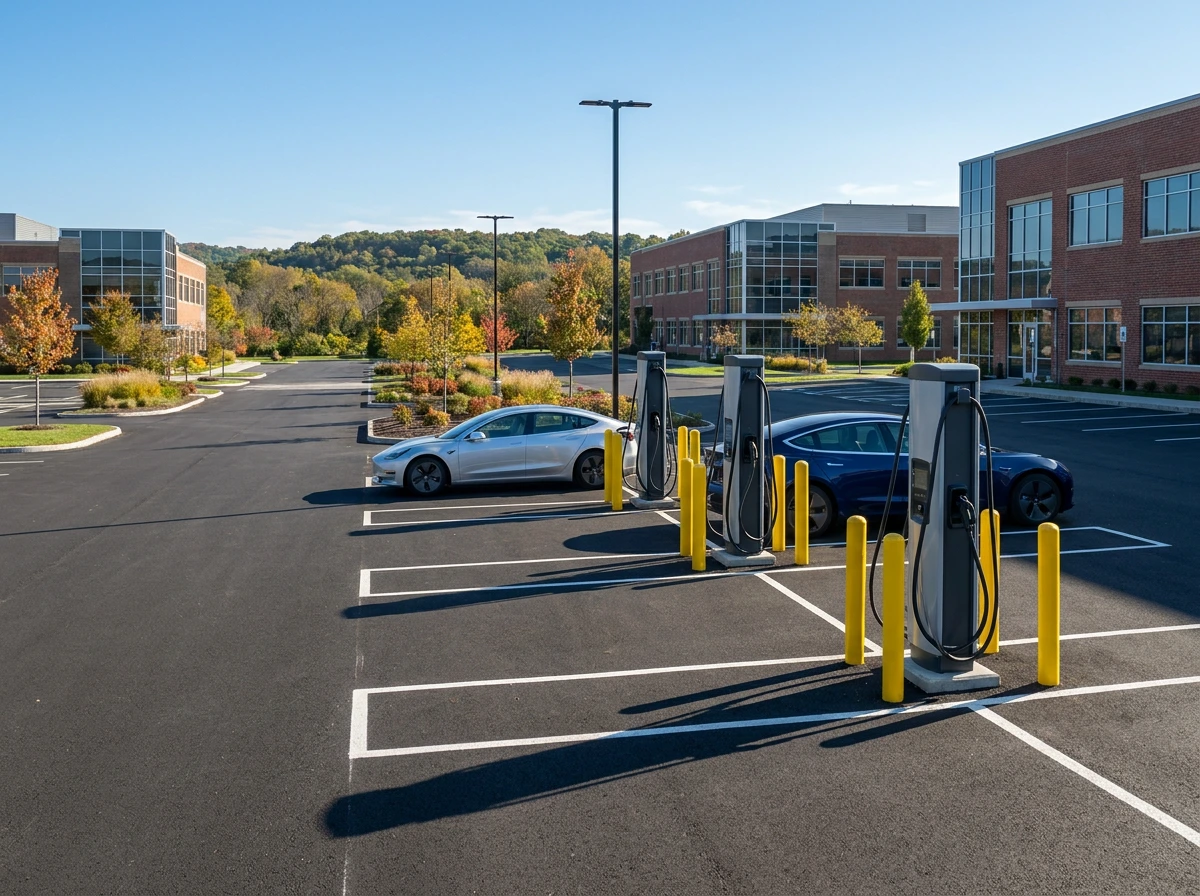
Workplace and Office Charging
Office charging projects should reflect how employees and visitors use the property. Parking duration, charger access, electrical capacity, and future demand help determine an appropriate installation.
Broad Reach coordinates construction around occupied buildings, pedestrian routes, and daily parking needs.
Retail, Hospitality, and Public Parking
Charging installations at shopping centers, hotels, and commercial parking facilities require careful placement. Equipment must work with existing traffic circulation, customer access, accessible routes, and maintenance operations.
We help coordinate the site improvements and construction sequencing needed to introduce charging while limiting disruption to the property.
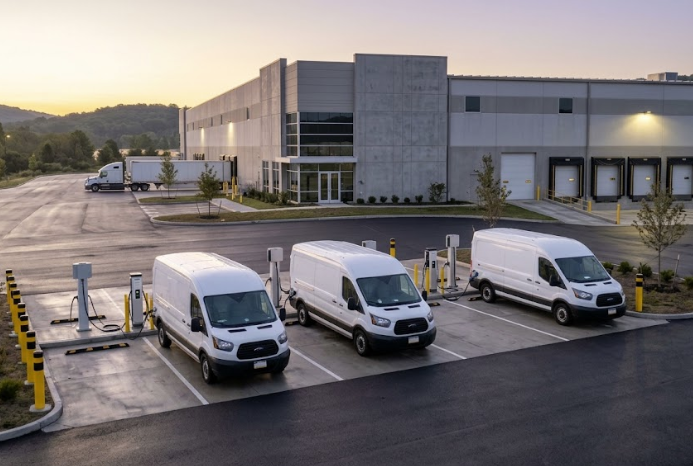
Warehouses and Distribution Centers
Warehouse charging projects may serve employees, visitors, delivery vehicles, or an operating fleet. Each application places different demands on parking arrangements, power availability, and construction phasing.
When charging is part of a larger development or renovation, our warehouse construction services in Pennsylvania help coordinate charging infrastructure with the broader facility plan.
Fleet Depots and Operational Facilities
Fleet charging construction starts with operational requirements: which vehicles need charging, when they return, how long they remain parked, and when they must be ready for service.
Broad Reach coordinates the construction team around those requirements so charging locations, equipment procurement, electrical work, and site circulation support the planned fleet operation.
Level 2 and DC Fast Charging Construction
Choosing between Level 2 charging and DC fast charging requires an evaluation of vehicle needs, parking duration, electrical capacity, and project economics.
Level 2 Commercial EV Charger Installation
Level 2 charging is commonly considered for properties where vehicles remain parked for extended periods, including workplaces, hotels, and certain fleet facilities.
Construction planning addresses charger placement, circuit requirements, conduit routes, equipment mounting, accessibility, and opportunities for future expansion.
DC Fast Charging Infrastructure
DC fast charging can serve projects that require shorter charging stops or faster vehicle turnaround. These installations can involve substantial electrical infrastructure and closer coordination with the serving utility.
Early planning should establish the proposed charging load, service requirements, equipment footprint, and utility delivery milestones before the construction schedule is finalized.
Broad Reach coordinates with electrical engineers, utilities, and equipment providers to align the construction scope with the selected charging system
Electrical Infrastructure and Utility Coordination
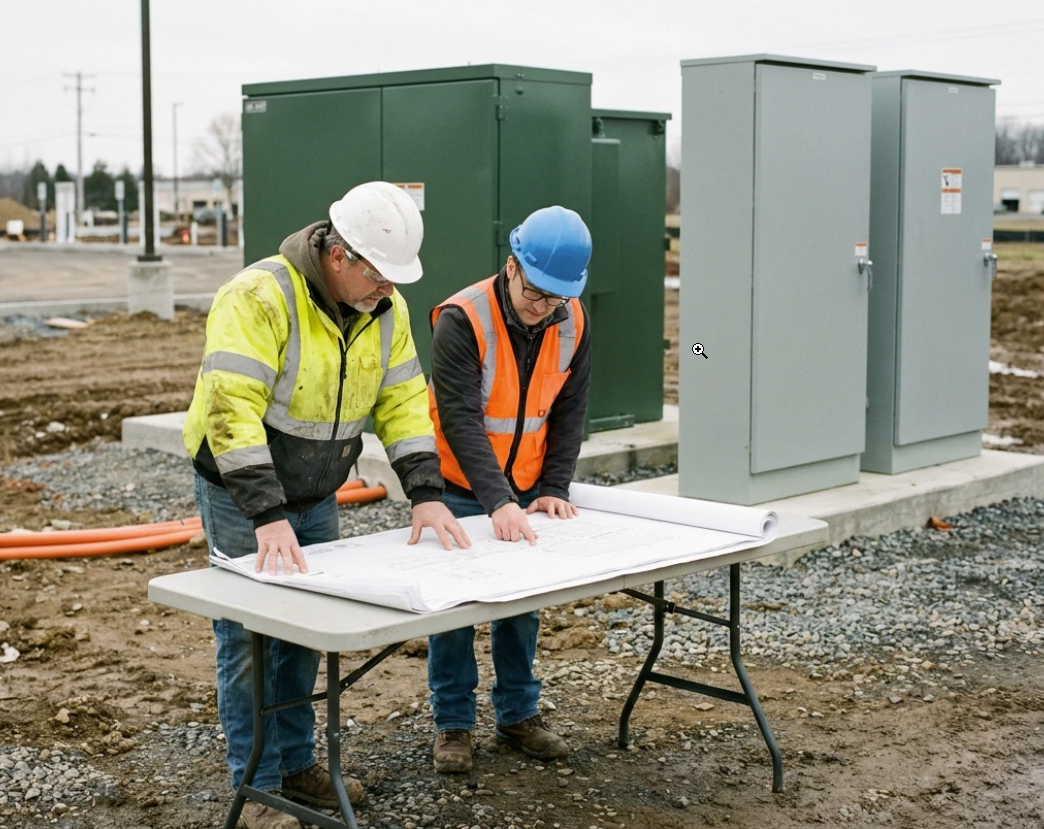
Power availability is one of the first questions to resolve on a commercial EV charging project.
The project team must determine whether the existing service can support the proposed installation or whether additional electrical infrastructure is needed. Depending on the property, the scope may involve new distribution equipment, service upgrades, transformer coordination, or changes to the charging plan.
Our coordination process addresses:
Existing service information and proposed charging demand.
Utility application requirements and responsibilities.
Electrical engineering and equipment specifications.
Transformer, switchgear, and other procurement requirements.
Utility work, inspections, and energization milestones.
Expansion allowances supported by the project’s design and budget.
Utility schedules and equipment availability should inform the overall project schedule from the beginning.
Site Work, Trenching, and Parking Lot Improvements
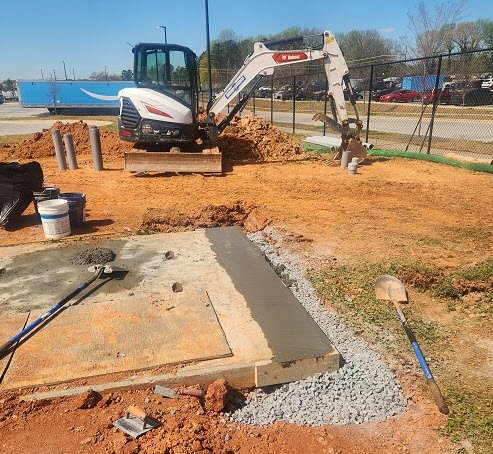
The work between the electrical source and the charging space can have a significant effect on project cost.
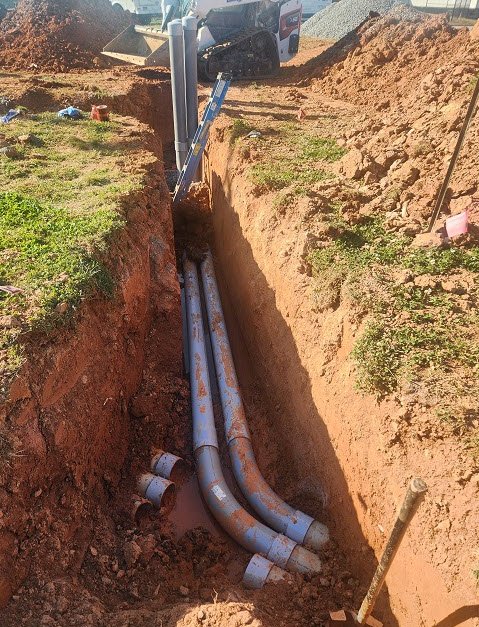
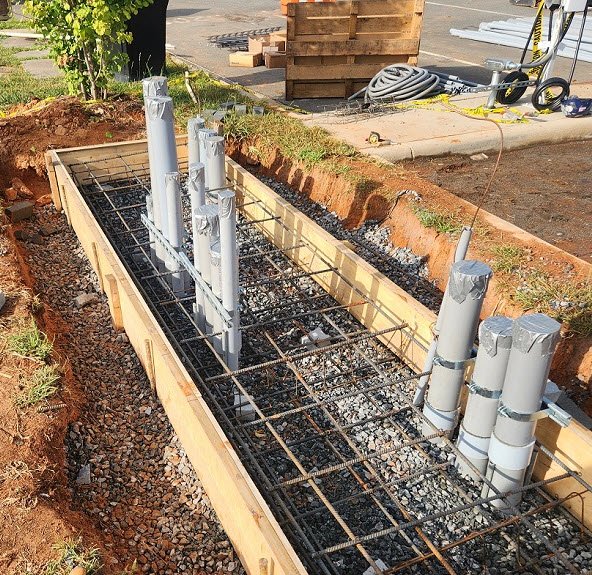
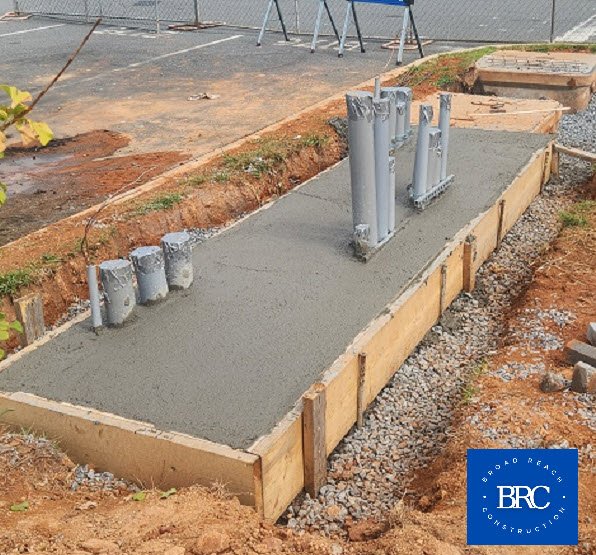
Commercial EV charging station construction may require pavement cutting, excavation, underground conduit, equipment pads, protective barriers, and restoration. Existing utilities, drainage, landscaping, and traffic patterns must also be considered.
Broad Reach coordinates civil work for EV charging stations with the electrical installation and site operations.
For occupied properties, construction planning can include temporary parking arrangements, protected pedestrian routes, staged work areas, and coordination of necessary shutdowns.
Our goal is to make the construction sequence understandable before crews begin work.
Pennsylvania EV Charging Permits and Accessibility Planning
Permit requirements depend on the project scope and the authority having jurisdiction. Electrical work, equipment foundations, parking changes, accessibility improvements, and other site modifications may require separate reviews or approvals.
Broad Reach coordinates with the design team and applicable reviewing authorities to identify submission requirements, inspection milestones, and responsibilities early.
Planning considerations include:
Applicable construction and electrical requirements.
Local zoning and land development review, where required.
Accessible parking and routes to the charging equipment.
Equipment placement, clearances, and protective barriers.
Utility approvals and required inspections.
Additional obligations associated with a funding program.
Requirements should be confirmed for the specific property rather than assumed from a previous installation in another municipality.
What Affects Commercial EV Charging Construction Costs?
A reliable budget includes the infrastructure and site work needed to make the chargers operational.
Major cost factors include:
Number of charging ports and selected equipment.
Level 2 or DC fast charging requirements.
Existing electrical capacity and required upgrades.
Distance between the power source and charging spaces.
Excavation conditions and underground conflicts.
Pavement, landscape, and parking restoration.
Accessibility improvements and protective equipment.
Engineering, permitting, testing, and commissioning.
Phasing requirements at an occupied property.
Broad Reach develops the construction scope with the project team so owners can evaluate costs, alternatives, and priorities before committing to installation.
Where a design-build delivery approach fits the project, early collaboration can help align design decisions with construction feasibility, procurement, and budget expectations.
How Long Does an EV Charging Construction Project Take?
The full project schedule includes more than field installation.
Site evaluation, engineering, utility review, permitting, equipment procurement, construction, inspections, and energization each contribute to the timeline.
A project using suitable existing electrical infrastructure will have a different schedule from one requiring a new utility service or major equipment upgrades.
Broad Reach establishes project milestones, identifies dependencies, and updates the schedule as utility, design, and procurement information becomes available. We also distinguish construction completion from the approvals and activation steps needed to place the charging system into service.
Pennsylvania EV Charging Funding and Incentive Planning
Funding opportunities should be evaluated early because program requirements can influence equipment selection, site design, documentation, procurement, and construction timing.
PennDOT administers EV charging funding opportunities through its National Electric Vehicle Infrastructure program. Eligibility and application requirements vary by funding round, and a program supporting public charging may not fit a private fleet installation.
Property owners should also check with their serving utility about current project support and any applicable programs.
Review the official PennDOT NEVI program information and Community Charging Funding Rounds for current requirements.
If one funding round has closed, continue reviewing other programs and future announcements. Construction planning can move forward while the project team evaluates appropriate funding opportunities.
Commercial EV Charger Installation Process: From Planning to Turnover
1. Define Your Charging Requirements
We discuss the property, intended users, proposed equipment, operating needs, and plans for expansion.
2. Evaluate Site and Infrastructure Conditions
The project team reviews electrical capacity, utility requirements, charger locations, access, and site construction needs.
3. Coordinate Design, Budget, and Approvals
We align design development, constructability, preliminary costs, permitting responsibilities, and procurement milestones.
4. Manage Construction and Site Coordination
Broad Reach coordinates trades, site logistics, safety, quality, schedule updates, and communication throughout construction.
5. Coordinate Testing and Turnover
We organize the remaining inspections, testing and commissioning responsibilities, documentation, and owner turnover requirements.
Why Choose Broad Reach for EV Charging Construction in Pennsylvania?
Broad Reach brings 25+ years of commercial construction leadership to projects where coordination matters.
Our construction management approach gives owners a central point of accountability for scope, budget visibility, scheduling, and communication across the project team.
Clients work with us for:
Early identification of infrastructure and construction risks.
Clear coordination among utilities, designers, suppliers, and trades.
Practical planning for occupied commercial properties.
Cost tracking and disciplined change management.
Field oversight focused on safety and construction quality.
Planning that considers future charging needs.
From our Pennsylvania base in Dallas, we support commercial project planning throughout Northeastern Pennsylvania, the Lehigh Valley, and other Pennsylvania markets.
For commercial properties in the Lehigh Valley, EV charging should be coordinated with parking, electrical infrastructure, and facility operations. Our construction management services in Allentown, Bethlehem, and Easton help owners integrate charging installations into new developments and existing property improvements.
Free Commercial EV Charging Planning Guide
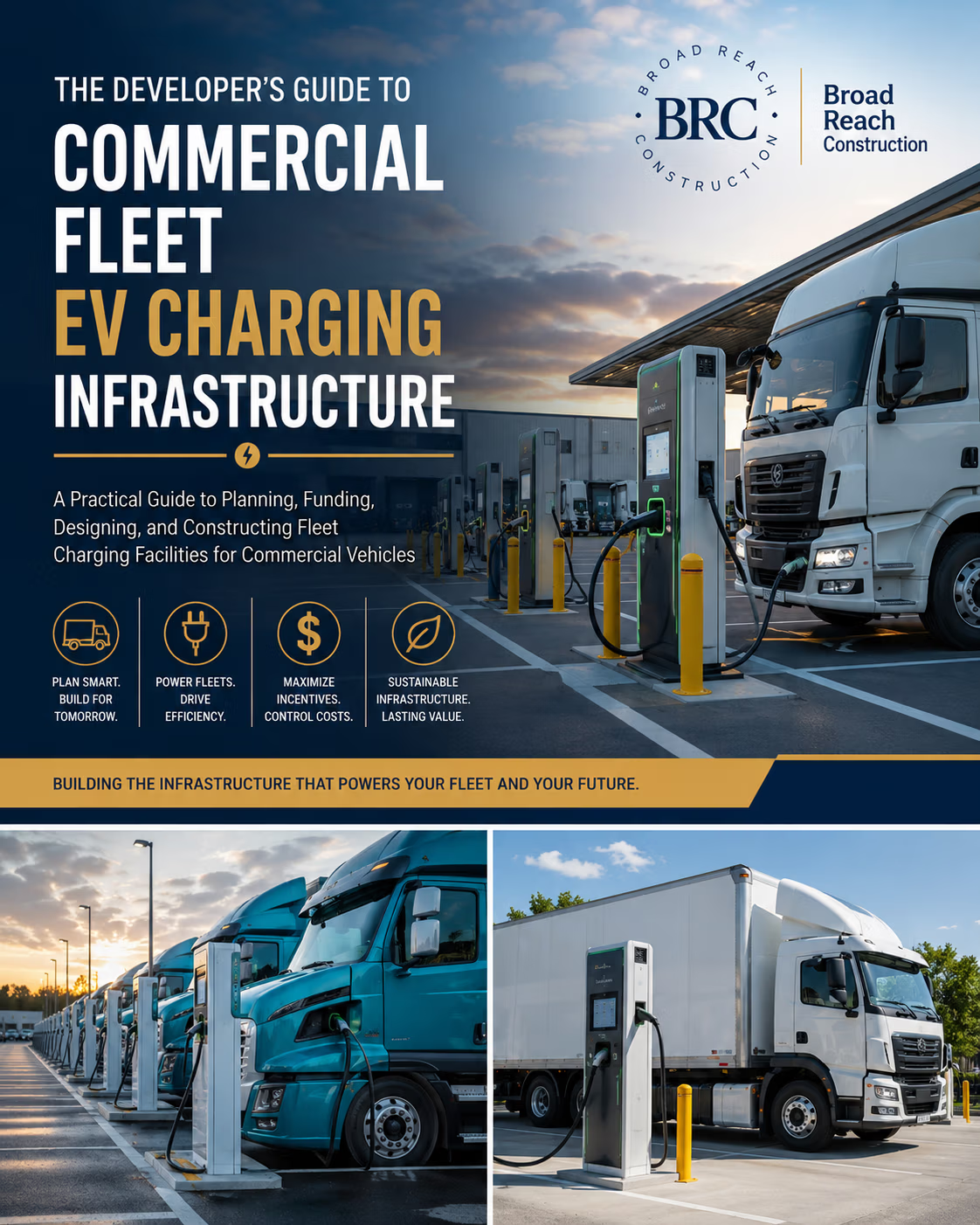
The Future of Commercial EV Charging Stations: Why Your Company Should Be Involved
Considering charging infrastructure for a commercial property or fleet facility?
Our free guide introduces the opportunities and planning questions owners should consider before developing an EV charging project.
Explore the guide through our Commercial Construction Resource Library.
Download the Free EV Charging Guide — No Registration Required
Frequently Asked Questions
Does Broad Reach manage complete commercial EV charging construction projects?
Yes. Broad Reach coordinates commercial EV charging projects from early planning through construction and turnover. The agreed project scope establishes responsibilities for design, utility coordination, permitting, site work, electrical installation, and commissioning.
Can EV chargers be added to an existing commercial parking lot?
Yes, subject to site feasibility and applicable approvals. Planning should evaluate electrical capacity, underground conditions, accessible routes, charger locations, and the work required to restore the parking area.
Can Broad Reach coordinate fleet charging construction?
Yes. We coordinate fleet charging construction around the proposed vehicles, parking arrangements, charging windows, electrical infrastructure, and facility operations.
Should I purchase EV charging equipment before evaluating the site?
Equipment selection should follow coordination with the electrical design team and serving utility. Confirming power availability, installation requirements, and any funding conditions first can help avoid incompatible equipment or changes to the construction scope.
Is a utility service upgrade always necessary?
No. Some properties may have sufficient capacity for the proposed charging load. Others may require upgrades or a revised charging strategy. The electrical engineer and utility should confirm the requirements for the specific project.
Can charging infrastructure be installed in phases?
Yes. A phased approach can introduce an initial group of chargers while planning infrastructure for later expansion. The design team should evaluate future capacity, conduit provisions, space requirements, and the cost of those allowances.
Are incentives available for every commercial EV charging installation?
No. Eligibility depends on the program, location, ownership arrangements, public access requirements, equipment, and other conditions. Review current official requirements before including funding in the project budget.
Start Planning Your Pennsylvania EV Charging Project
Before ordering chargers or beginning site work, establish a clear plan for power, permits, construction, and project delivery.
Broad Reach Construction Management helps Pennsylvania property owners, developers, and fleet operators turn charging requirements into a coordinated construction project.